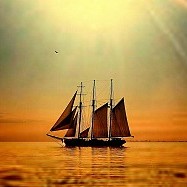
Last night we had a party for the launch of my second book, Death in a Dacron Sail. It was huge fun – just socializing with friends and imbibing some good wine and beer. We held it at the Top of the Hill Restaurant, which brews its own beer. The party was in the Tank Room, two flights down from the roof- top restaurant (so sort of the Bottom of the Hill); this space contains the huge vats of the beer they brew, displayed behind glass windows. There was a full bar, and we chose a menu of beer and wine varieties for everyone. A few tables and a display of the books – the rest was schmoozing with good friends. No book transactions, just fun. Well, I did sign one – for a very special guest, Dr. Larry Gilbert, my research mentor and adviser, who at 86 is still my role model. I counted three other published authors among the guests, along with all the members of my Early Birds critique group. Three of us have been together for four years, the rest for at least two. I’ve never been to a launch party before, but I did hire a marketing group – Yardarm Media – to help me, and they suggested the launch party. With their help, I’ve had and will have several interviews and the readings are lining up. Since many publishers expect you to do your own marketing, self-publishing (via Create Space) plus having a marketing group seemed like a logical and less daunting (not to mention less frustrating) way to get my books out there. Has anyone else hired a marketing firm? Had a launch party? What did you do for it? I’d love to know! 0 0
The Watchmen is the second book in the Britannia series by Richard Denham and M.J. Trow. I read and reviewed the first book in the series, The Wall. I liked that book; this one was more entertaining. The Wall began in AD 367 in Roman Britannia, modern day England. The Watchmen is set years later and the four so-called ‘Heroes of the Wall’ are living very different lives from their earlier roles in the Roman Army. Leocadius, once a bragging and womanizing pedes or foot soldier, is now a leader in civilian life, the council of Londinium (London), with a cold wife and a warm mistress, Honoria. The beautiful Honoria runs an upper class brothel and has a child, Scipio, with Leocadius. Vitalis, also once a foot soldier, has become a Christian and now lives in a rough house by the Thames, where he weaves baskets for sale from the river grasses. Justinus, once a 30 year old non-commissioned officer of the cavalry, is now Commander of Hadrian’s Wall, tasked with protecting Britannia from invaders from the wild lands north of the Wall. Paternus, a semisallis (a rank above pedes) had lost his family in the earlier book and had made a political marriage with Brenna, female leader of the Voltadini, to tie her people to Rome. They’d fallen in love and had a child together, but Paternus had died five years before the story begins. Justinus is in love with Brenna and committed to overseeing the development and education of her two boys, one from an earlier marriage and the one fathered by Paternus. Around these characters the book swirls, moving swiftly from one to the other, leaving the reader with multiple cliffhangers. The figure tying the separate story lines together is Magnus Maximus, commander of the Roman Army in Britannia. He declares himself Caesar, a challenger to the throne of Gratian, Emperor of the western Roman Empire. Gratian shares the throne with his brother Valentinian II, Emperor of the eastern half of the Roman Empire. At the beginning of the book, Maximus is demanding and winning allegiance from the various native tribes in Britannia, as their Caesar. Leocadius is mired in the politics of Londinium and saddled with a grasping wife. He plays dice for his life. Vitalis wants a peaceful life but has to rejoin the military to help his sister Conchessa find her husband, who defrauded Valentinian and is missing. Justinus is facing a massive incursion of invaders determined to kill everything and everyone in their way and has to work with Maximus and the tribes allied with him to stop them. Each of their stories winds through the book like ribbons on a maypole, detailed with Celtic legend, Egyptian mysticism and tribal battle-fury. How many of the remaining three Heroes of the Wall will survive? I only have two negative comments: first, the story of Maximus’ campaign against Gratian is given short shrift – in itself, it could have been another volume; second, there were places where the characters use very contemporary expressions, which was a little jarring. I appreciated the glossary at the end of the book for Roman terms with which I wasn’t familiar, and the map showing sites from the narrative. Richard Denham is a self-taught Roman historian with an exhaustive knowledge of this period; M.J.Trow is a military historian. They have combined their talents to bring the Britannia of the fourth century and its citizens to life. I fully admit I am not an historian and perhaps some who are might quibble. But as a general reader, I recommend this book for anyone who enjoys historical fiction and Roman history. Where I felt the first book in the series would appeal mainly to men, this book has a broader appeal. I’m hoping to see a third book soon. 0 0
A review of Death in a Dacron Sail is in. Check out Book Club Mom. Book Club Mom.doc or https://bvitelli2002.wordpress.com/2015/02/25/rhe-brewster-is-at-it-again/. Many thanks to Barbara Vitelli for the review. My book release party is Monday evening (I’ll post pictures), and the book is already on Amazon. If you read it, please review it! The Kindle version will be available by Thursday of next week. Let the games begin! 0 0
I gratefully accept The Versatile Blogger Award, and because of the lengthy award acceptances last night at the Oscars, will keep this short. (Applause, bows) I apologize to CaptainSparklez who nominated me for the award last month. I’m happy I finally have time to recognize this honor and thank him. His website is called, interestingly enough, Troll Base, and you can find it at: https://mlgpronoscopezzz.wordpress.com/ There you will find poetry and opinion and a page for jokes, which needs more entries!! For this award, I am to nominate 15 other bloggers. If any of the nominees already have this award or would like to decline, I am sending you a bouquet of flowers instead, which you can post on your blog if you wish. Sally, of Smorgasbord – Variety is the Spice of Life – gave me this idea. This is my list: Betty Stephens at Betty A. Stephens, Maine Author http://4writersandreaders.com/ Barbara Vitelli at Book Club Mom https://bvitelli2002.wordpress.com/ Cindy Knoke http://cindyknoke.com/ Charli Mills at Carrot Ranch Communications http://carrotranch.com/ Coleen Chesbro at Silver Threadings http://silverthreading.com/. Michael Jeck at WriterlyWiterings http://writerlywitterings.com/ Olga at Just Olga https://olganm.wordpress.com/about/ Stepheny Forgue Houghtlin http://stephenyhoughtlin.com/ Viv Drewa at the Owl Lady Blog https://theowlladyblog.wordpress.com/ Paul G. Day at Brave Bear Books http://bravebearbooks.com/ Pete Deakon at Captain’s Log http://petedeakon.com/ Ali at A Woman’s Wisdom https://awomanswisdom.wordpress.com/ Anthony Vicino at One Lazy Robot http://onelazyrobotblog.com/ Fia Esson at Fia Esson, Write https://essenfia.wordpress.com/ Esther at Hortus Closus https://hortusclosus.wordpress.com/ And now for seven things about myself: I used to be 5’ 10”’ tall. Used to be is the operative verb. My hair color was once a deep red. I shudder. I have huge feet. Which is why I wear sandals a lot. Thank heavens I live in the South. I am allergic to surgical tape from too many surgeries. None of them cosmetic…well… My eyes really are that blue – I don’t wear contacts. My daughter is Korean. We’ve been blessed every day since we got her. My favorite food is pizza, hot or cold. I do have preferences with regard to the source, though. (A deep bow to my readers.) 0 0
As most of my blog readers know, I have the second book in the Rhe Brewster Mystery series coming out soon. March 2, in fact. This time I’m having a book release party to celebrate! Book Club Mom (aka Barbara Vitelli) kindly accepted an advanced reader copy and posted yesterday to advertise my book (heartfelt thanks to her). Go to:Book Club Mom.doc or What’s up next? A new Rhe Brewster Mystery! More to come, with pictures from the party… 0 0
This piece was published in Deep South Magazine in 2012, but I dug it out of the archives because of the ice storm last night. Southerners flinch at a snow flake, close schools and businesses and run to the grocery store for milk and bread. It’s a fact. The South seemed like a nice place to put down roots, and those travel magazines can be pretty convincing. My husband and I first thought about moving to North Carolina thirty years ago after looking at pictures of the eye-popping fall colors in the mountains and the crystalline sandy beaches and cerulean blue waters off the Outer Banks, plus we were told that the weather was nice, but mostly we came because we both found jobs here. During my first week in North Carolina, temperatures hovered around 100o, with humidity that made it feel like a blast furnace, and I dreaded going outside. But gradually over the years, and with the help of whole house air-conditioning, I’ve come to welcome the heat and found it’s the perfect topic to open a conversation. “It’s a scorcher outside today.” “Yep, even the flies aren’t buzzin’.” Shortly after learning to begin conversations this way, I became aware there is a distinctive way of speaking in the South. Part of my transition as a North Carolinian was a gradual discovery that the Southern lilt is soothing to my ears, and some of the more unique terms are downright enjoyable. I’ve even found myself using “y’all” from time to time. But in the beginning, some translation was involved. Telephone calls, for example. When I called anyone, the immediate answer was, “Hey. What can I do for you?” What happened to hello? I thought. I discovered that the Civil War was really the Wahr between the States, that when you go to get your North Carolina driver’s license, you have to bring cash money, and that at the supermarket they sell a fish called sal-mon. When a student once fainted in class, another student came to tell me that her friend had done fell out, and I thought she had fallen down some stairs. At some point, I bought a book called Speaking Southern, thinking to get a leg up on this new language, but the book really didn’t help for ordinary conversation. My first lab technician, a lovely girl named Laura, spoke Southern. One morning she came in with her hair looking like a hornet’s nest. “What happened to you?” I asked. “You look like something the cat dragged in.” “I came in a sod cah,” she replied. “Mmmmm,” I said and went off to think about a translation. It turned out to be “side car”. I once called a physician’s office to make an appointment, before the curse of depersonalized, automated answering services. A receptionist answered my call in a honeyed Southern accent: “Hey, this is Dr. Winslow’s office. What can ah do for you?” To which I politely responded. “Hello, this is Noelle Granger. I’d like to make an appointment.” There was a distinct pause on the other end of the line. Then she said, “Dr. Granjah? Is there an ahr at the end of your name, darlin’?” Before long, I found myself starting almost all of my phone calls with Hey, and it sounds just fine to me. Local sports were also transformative. We were now living in a gigantic hot bed of exciting competition. Betting that Northwestern would be behind by 50 points at half time in a football game with Ohio State was about the most excitement we had had in Chicago. So for the last 30 years, we have been like possums eating honey. But there’s one thing we’ve never gotten used to, and that’s the fact that racing cars is considered a national sport in this part of the country. Whipping your head from side to side as cars scream by at unimaginable speeds has never appealed to me because it does a number on my neck muscles, but a lot of people do seem to enjoy it. I am proud to admit that I have become, and always will be, a Tar Heel. When we ventured out to the seething mayhem and bonfires at the corner of Franklin and South Columbia, on a night when UNC won a national basketball championship, and I got my leather coat painted blue and didn’t mind, I knew I was home. As a former Northerner, I know snow. We had ninety-six inches our first winter in Chicago and had to carve a tunnel to get to our garage. All in all, winters in North Carolina are mild by comparison, and I would never move back north. I figured I had become a North Carolinian when I found myself heading to the supermarket after just the prediction of a snowfall. A few years after we moved in, we experienced our very first bad winter weather and discovered that the electricity is never guaranteed, especially if there is any sort of frozen precipitation. Our serious first ice storm left us without electricity for 10 days. Because we didn’t happen to have a generator, which seems to be a standard piece of equipment in every North Carolina garage, we resorted to stoking wood fires in our two fireplaces 24/7 and with some luck, located a kerosene heater. The kerosene smoked belligerently when we lighted it and layered the ceiling in the family room with a coating of soot. We took it back. As we entered the store, the clerk gave us a strange look. “It’s defective,” he stated wrinkling his nose. Even with a working kerosene heater finally installed, it was still cold in the house, and particularly upstairs in the bedrooms. So naturally, we all slept in one bed. The kids took the middle and snuggled in. Once my husband and I got in on the edges and covered up, our cats, determined not to be left out, inserted their bodies under the
The Last Dragon Slayer by Martyn Stanley is the tale of a quest, book one of the Deathsworn Arc series. I’ll confess I do like fantasy, along the lines of The Game of Thrones (I’ve read every volume), The Hobbit and Lord of the Rings. This story has the some of the same basic elements of Lord of the Rings:: a quest, in this case given by the Empress of the land, to slay a Noble Dragon which threatens the northern border of her kingdom, in return for a reward of gold. The band of questers include Saul Karza, a wizard, whose pointed hat doesn’t emerge until facing the dragon; Korhan, son of Brian, a sellsword (sword for hire, if you are not into fantasy); Harald, son of Korvak, another a sellsword; a dwarf, Vortex, who is homeless, having been unable to reenter his home beneath the earth because of magic; Silus Mendelson, an old soldier who was the last man to slay a dragon; a dark elf called Brael the Truthseeker, who was bound by magic not to tell the truth; and the Lady Vashni, a mysterious elf who joins them on their way to the dragon’s lair. The cover of this book is very evocative, and there are lovely illustrations at the end of the book of the characters, with a brief description of each. I would suggest placing them at the beginning to help the reader identify them. The story begins rather slowly, and I must admit it took me a bit before I got into the read, largely through the descriptions of the country as the band began its journey. There are the usual roadblocks along the way and you eventually get to know the characters, who are well limned. What changed the story for me was the appearance of Vashni, who has the ability to whisper, that is, to change the mind of the person to whom she whispers. Korhan finds himself enthralled with her beauty and her abilities, and agrees to be her Risine (here I use an s for an elvish rune; the author explains how to pronounce it). A Risine is the cross between an abject slave and a student, and Korhan finds himself not only serving her but being made to do demeaning things such as kissing her boot, while she teaches him how to strengthen his mind and improve his swordsmanship. It’s an interesting relationship, especially when she blinds and deafens him for period and then turns him into a vegetarian! Their relationship is strange and wondrous. You do learn more about each character during the course of their journey, and their confrontation with the noble dragon is quite exciting. And there’s a twist at the end: did the Empress want them to slay the dragon just because it threatened the kingdom or is something else at play? Of course there is a sequel. If there was one problem I found with the book, and I know this sounds picky, it was the lack of punctuation. I found myself having to reread sentences because I couldn’t figure out where one ended and the next began, if they did, or where to take a breath. Anytime I have to stop in a read for something like this, it takes me out of time and place. In any event, it became a rollicking tale with enough swordplay and magic to keep younger readers enthralled. I did enjoy it, and I think this book will have wide appeal and develop a good following with the subsequent books. Martyn Stanley lives near the Staffordshire/Cheshire border in England, with, according to his bio, his long suffering wife and two small children. He’s always enjoyed epic fantasy novels, so it seems natural that he would write them. His Deathsworn Arc was written to be more than a hack and slash, swords and sorcery series; it examines, faith, companionship, morality, pragmatism and more. He writes that if the characters of The Deathsworn Arc come across as strange, it’s partly because they’re intended to. I wish him the best with this series. 0 0
The news about my second book is beginning. Here is the link to my interview with the Chapel Hill Magazine: http://www.chapelhillmagazine.com/blogs/chapel-hill-magazine-blog/q%26a%3A-noelle-granger/ 0 0
I’ll admit it, I’m a chocoholic. Totally, extremely, unashamedly so. I would never go to a meeting of Chocoholics Anonymous and confess my addiction, if there were such meetings. I bet they’d serve cocoa and brownies. You name it, if it’s chocolate, I’ll eat it – candy, cake, cookies, muffins, cupcakes, the list is long and delicious. I was stimulated to write this post by the Story Reading Ape, who had a post on chocolate the other day, and David Prosser, who complained the chocolate added to his waistline. I won’t deny it, chocolate can do that. But it has benefits as well – see Women’s Health http://www.womenshealthmag.com/printwhlist?nid=31240ll – for the full story and the studies. Cardiovascular benefits: One or two servings of dark chocolate each week can cut your risk for heart failure by as much as a third and lower your blood pressure and risk of heart attack and stroke by 39 percent. Most of the credit goes to flavonoids, antioxidant compounds that increase the flexibility of veins and arteries. Weight loss: Dark chocolate is far more filling, offering more of a feeling of satiety than milk chocolate, and it lessens cravings for sweet, salty, and fatty foods. Better pregnancy outcome: Women who ate chocolate daily during their pregnancy appear better able to handle stress than those who didn’t. Another study found their babies were happier and smiled more. Diabetes benefits: Yes, you heard me. In a small study, participants who ate a bar of dark chocolate once a day for 15 days saw their potential for insulin resistance drop by nearly half. Go figure. Reduced stress: When very anxious people ate an ounce and a half of dark chocolate every day for two weeks, their stress hormone levels decreased significantly and the metabolic effects of stress were less. I can vouch for this! Sunburn protection: Three months of eating chocolate with high levels of flavanols should double the time your skin takes to develop the beginning of a burn from sun exposure. Cough relief: Chocolate can quiet coughs almost as well as codeine, thanks to the theobromine it contains. Diarrhea relief: The flavanoids in cocoa bind to a protein that regulates fluid secretion in the small intestine, so it can potentially stop the green apple two-step. Higher intelligence. So that explains why I’m so darned smart 😉 Drinking cocoa rich in flavanols boosts blood flow to key parts of the brain for 2 to 3 hours, which could improve performance and alertness in the short term. A study of the diets of more than 2,000 people over age 70 found that those who consumed flavanol-rich chocolate scored significantly higher on cognitive tests than those who didn’t. So chocolate has anti-aging effects as well! There are limits, of course, to chocolate intake. You should stick to chocolate with at least 70 percent cacao (or cocoa) and because of its high fat and sugar content, limit yourself to 7 ounces, or about four dark chocolate bars, a week. Here is a recipe for low-cal brownies that can also be eaten by chocoholics who are gluten-free. Flourless Brownies from Skinnytaste.com Servings: 16, Calories: 144 per serving Ingredients: 1 (14 oz) canned low-sodium black beans, rinsed and drained 2 large eggs 1/2 cup cocoa powder 3/4 cup sugar 1/2 teaspoon oil 1 tablespoon unsweetened almond milk (or dairy, skim) 1 teaspoon balsamic vinegar 1/2 teaspoon baking powder 1/2 teaspoon baking soda 1/2 teaspoon of freshly ground coffee or instant coffee 1 cup semisweet chocolate chips, divided (Hershey’s)( you could theoretically use any kind of chocolate chips) Directions: Preheat the oven to 350° F. Grease a nonstick 9 x 9-inch square baking pan with baking spray and line with parchment paper, leaving a 2-inch overhang on all sides. Blend the black beans, eggs, cocoa powder, sugar, oil, almond milk, balsamic, baking soda, baking powder and coffee in the blender until smooth and pour into a bowl. Fold in 1/2 cup chocolate chips until combined. Pour the brownie batter into the prepared pan. Sprinkle the remaining chocolate chips evenly over the top of the brownies. Bake the brownies until a toothpick comes out clean, about 30 to 32 minutes. Allow the brownies to cool completely before slicing them into squares. 0 0
I am a huge fan of historical fiction and looked forward to reading this book. I was not disappointed. Two Rivers, by Zoe Saadia, is the beginning of the Peacemaker series of historical fiction. It creates the world in which five sister nations of Native American came together to form the great Iroquois confederation that lasted for centuries. According to history, a Great Peacemaker came from the Wyandot (Huron) people and crossed Lake Ontario to southeastern Canada. There he encountered what he had experienced with his own people, a vicious cycle of warring and retribution, which drained the tribes of their young men and their resources. Without their men, the people had less plentiful crops, meat, and other things they needed to survive the harsh winters. It was the work of the Peacemaker to join the nations, and formation of this confederation lead to the creation of a well-defined constitution, in pictographic form, which would serve in part as the basis of the US Constitution. In this first book of the series, the reader meets Two Rivers, a man supposedly the product of a virgin birth, whose life is overshadowed by the prophesy accompanying his birth: that he is destined to achieve great things. Two Rivers is a thinker, and he is frustrated by the Elders of the tribe when he makes observations and logical suggestions for change. The tribe also has an adopted young man, Teneka, captured when his tribe raided the tribe of Two Rivers. He is now seventeen, brash, willful and outspoken, and easy to take offense and not well-liked, even by the clan which adopted him to replace one of their young men who had died. Action begins in the first chapter, when, during a game of lacrosse, Teneka gets into a fight and seriously injures Yeentso, an older warrior and a bully from another clan. Two Rivers stands up for Teneka and the tribal council decides that Teneka must make amends for the injury by providing Yeensto’s clan with the hide of a grizzly bear. Two Rivers goes with him to kill the bear, advising but not participating. Teneka also falls in love with Seketa, a beautiful young woman from another clan who is nearly as outspoken and headstrong as she is. Things come to a head when the Chief is killed in a raiding party and Two Rivers is blamed for not having joined in the raid but instead helping Teneka. The author is a dedicated researcher of the early Native American peoples and her knowledge enriches this story in the everyday details of life in a village, the customs, the celebrations, their food and its sources. Her character development is wonderful and the reader is easily lost in this story, which artfully mixes fact and fiction. I have already downloaded the second book in this story, since I did not wish to lose the characters who had made such an impression. I recommend this book without reservation. A great read! When Zoe Saadia first recognized that both Americas have an extremely rich, diverse, fascinating history long before they were discovered by other civilizations, she also noted that this large part of history was completely overlooked, by historical fiction most of all. After years of research and creative writing, she has written two trilogies and one series, 11 full-length novels, all covering the turbulent history of Mesoamerica when the Aztecs were busy coming to power. The Peacemaker Series of four books, of which Two Rivers is the first, deals with the creation of the famous Iroquois Confederacy, one of the oldest democracies on earth. 0 0